Being a part of the queer community can be a series of contradictions. While being part of the LGBT+ community can provide kinship with a group of likeminded people, it can also be an alienating experience, as fundamentally there will always be something that sets you apart from a number of your peers. This isolation is only exacerbated when you are an atypical queer person, as is examined with acuity and wit in India Kotis’ Bisexual Sadness, now making its Regional Premiere at Trinity Street Theatre thanks to Jarrott Productions and director Will Gibson Douglas. Bisexual Sadness tells the tale of bisexual bride-to-be Faye who falls into an identity crisis in the days leading up to her marriage to Alex, a loving, sensitive man. Along the way we’re introduced to a vast spectrum of people, from queer to straight to everything in between, each grappling in their own way with sexuality, gender, and personhood, and the often intense feelings that come with that journey of discovery.
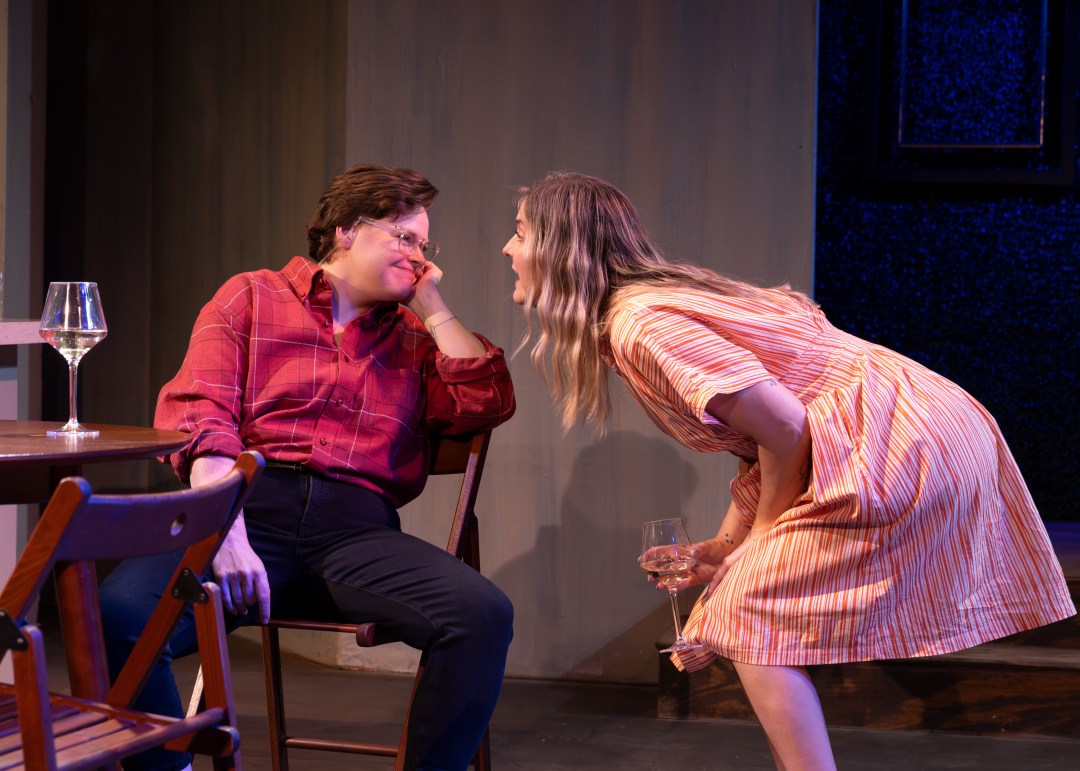
When we first meeting Kelsey Mazak as Faye, she’s in the process of picking out a the perfect dress for her upcoming wedding. Though at first she seems bursting with joy, even at these early stages we see that there’s doubt behind her eyes, as it’s an event she views with no lack of trepidation. As a bisexual woman, she feels that her marrying a man makes her less of a bisexual, less queer. This doubt creeps into several moments throughout the piece, especially in many early scenes with Faye’s fiancé Alex, played with unflappable sensitivity by Christopher Gonzales, or with her recently divorced older sister Miranda, in which Faye’s tone and affect because almost a rehearsed charade. The only time she feels her true, authentic self are in her moments with CB Feller’s Genevieve, a proud, polyamorous lesbian, played with a perfect balance of suave confidence and buried insecurity, who embodies everything Faye wants to be. As the play nears its climax, all these roiling emotions ignite into a captivating explosion of repressed feelings and doubt. There’s a lived honesty to Mazak’s performance, a bone-deep authenticity, Faye feeling like Mazak’s favorite winter coat that she’s slipping into. At times the subtle pieces of Mazak’s performance can get lost amongst the powerful performances of some of her castmates (particularly the hilariously, but believably, larger than life performance of Catherine Woodiwiss as Miranda), but Mazak always acts like a steady anchor for the audience amongst all the chaos.
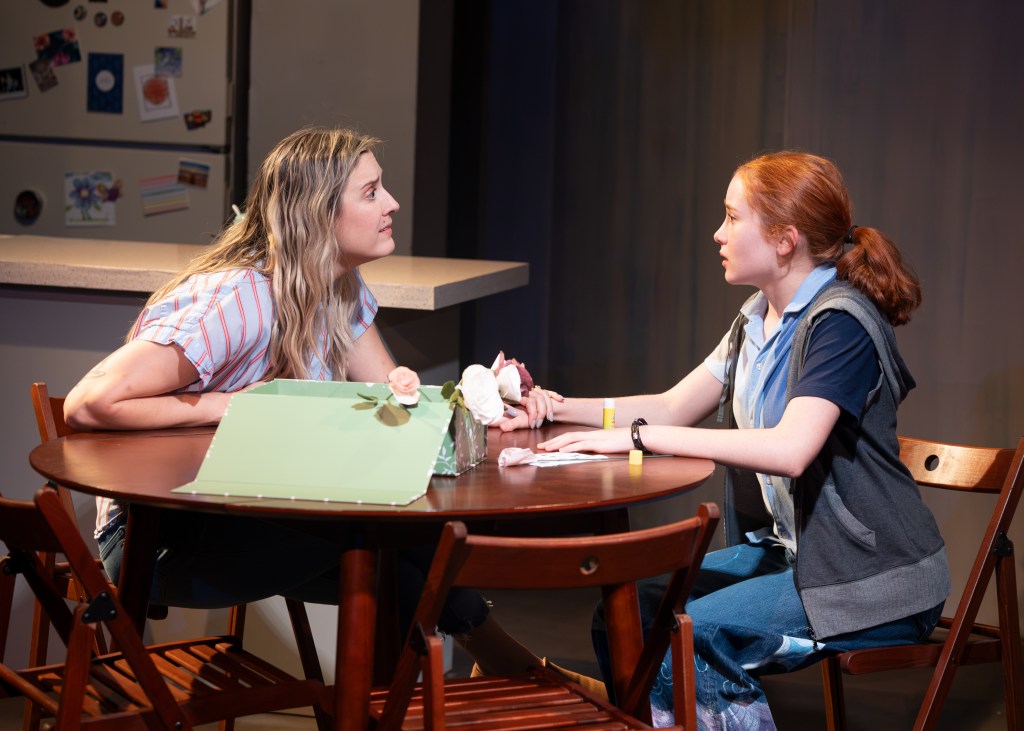
The “child bucking against the reins of their parent” trope is one prevalent in many forms of media, but Naomi, the teen at the heart of one of Bisexual Sadness’s most poignant storylines, is a thoughtful, layered being, and one of the play’s most complex characters. A pre-teen coming to terms with being both non-binary and femme-attracted, they’re stuck in a whirlwind of confusing emotions. This maelstrom of feeling would be enough for any actor to wrangle, but brilliant young performer Violet Bolton is not only able to lasso this cyclone, but mold it into something gleaming and precious. Bolton holds the reins of the play’s most emotionally devastating moment, in which they bemoan the fact that, since coming out to their mother and aunt, their family has stopped treating Naomi as a full person, instead treating them as something othered, a thing with a label instead of a living, breathing human. In these moments Bolton embodies that alienation and separation that so many in the queer community feel, when instead of feeling like part of a community, they feel cast off from everyone else. Bolton shows the emotional intelligence of a performer twice their age, bringing this critic to tears with how boldly in-tune they are with their emotions, creating the kind of subtle, controlled, and perceptive performance that one treasures. Here, they create the kind of moment this critic comes to theatre for, and I cannot wait to see what dizzying heights this performer will reach.
I found myself tearing up during several stretches of Bisexual Sadness. When I first discovered I was queer, there was always a question of whether I was queer enough. I could easily pass as straight, especially as my asexuality meant that I was never partnered, I never had to face the judgement of being seen with a same-sex partner on the streets, despite being panromantic. There was always the question if I’d be welcome in LGBT+ spaces as an ace person, whether I was queer enough to march in the parade, or go to a queer bar. Bisexual Sadness speaks so wonderfully and thoughtfully to this sense of queer alienation, and amongst this group of shaggy friends, family, and lovers, I could see a growing seed of hope for doubtful community members like myself. It may not have answers to all the questions it broaches, and it can be forgiven for not capturing all of the many dimensions of the queer experience, but Bisexual Sadness is an important, poignant, and often quite funny piece of queer art that I hope finds the audience it deserves.
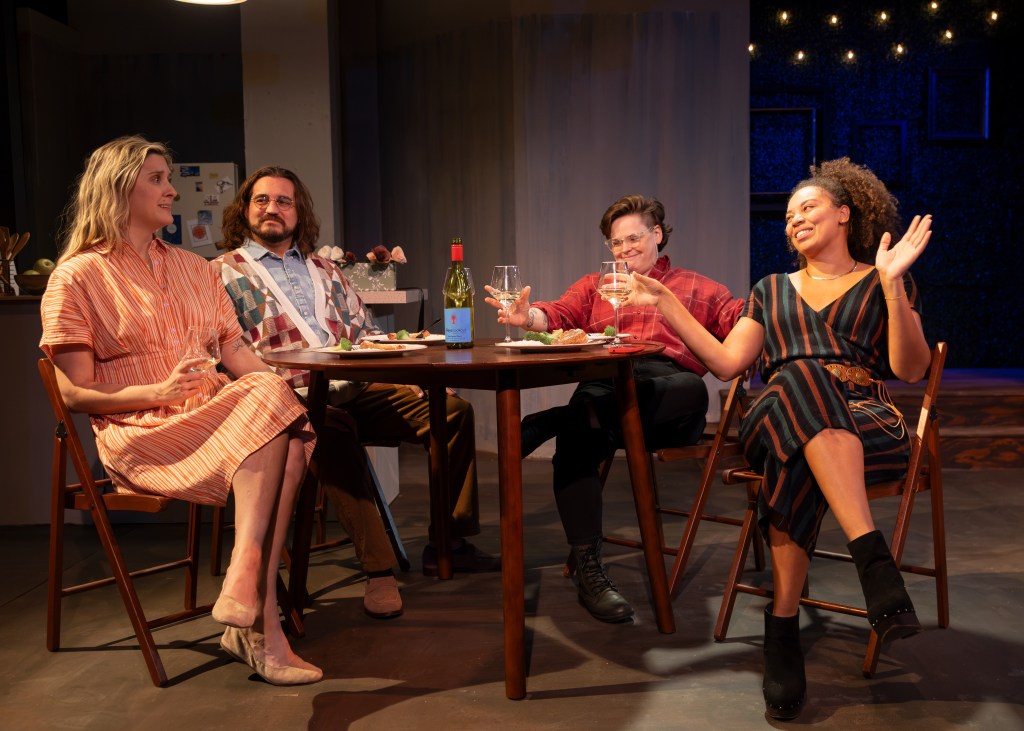
Bisexual Sadness is playing through November 22nd at the Trinity Street Theatre. For more information, and to purchase tickets, please visit Jarrottproductions.com.
Photos courtesy of Steve Rogers Photography.


