

Roger Ebert once called film a “machine that generates empathy”, but over my years of reviewing the arts, I’ve found few mediums really help us empathize with the people around us more than theatre. Dear readers, I am not a woman (this may be a revelation to some of you, and for that, I’m very sorry). I know that as a man I will never truly know the pains, joys, heartbreaks and dangers of being a woman in today’s society, but as I left the Ground Floor Theatre after their latest production, I Wanna Be a F*cking Princess, tears in my eyes and a smile on my face, I felt an undeniable connection to that pain, that harrowing journey, the triumphs and sorrows of living a woman in these difficult times. Writer Jenny Connell Davis, Director Patti-Neff Tiven and their cast and crew have created a fast-paced, hilarious, but heartbreaking and affecting story of a decades-spanning friendship between five very different women, told with a unique style by a group of some of Austin’s most talented creatives.
It would be irresponsible for me not to give a warning here for just what you’ll experience in I Wanna Be a F*cking Princess. The plays is a raw exploration of the role of women in today’s society, and with that comes a lot of material that might be difficult to watch. Though nothing is physically shown, the show contains descriptions/brief depictions of sexual, emotional, and physical abuse, some of children, some from parents, as well as gaslighting and medical trauma, so if any of that material may be triggering, be sure to come prepared. Though in many ways seeing this things depicted may be cathartic, the empathetic writing of the piece may make these elements especially traumatic to some.
I Wanna Be a F*cking Princess packs a lot into its tight, quickly-paced 80 minutes. We follow almost 50 years with these five women, all of whom live very different lives, with very different struggles. Centering from a mid-point of one of the friend’s wedding, we jump to points throughout their lives, from their experiences as pre-adolescents forced to grow up too fast, to older women forced to grapple with death, grief and loss, with several intriguing stopping points in between. Writer Jenny Connell Davis has done something quite remarkable here in creating a work that spans such a wide breadth of time, and experience, into such a brief runtime. We see the wonders of friendship, the comradery and commiseration of women working together and protecting each other; but also the pains of assault, abuse, loneliness, and grief.
To play this cadre of women, director Patti Neff-Tiven and her crew have brought together some of the most talented actresses in town, and each shines in their own unique way. Indeed, the way each actress seems to encompass their character, it feels as if each role was written specifically for them. At the center of the action is Jenny Larson-Quiñones as Bella, who, as the play begins, is preparing for her wedding, a lavish affair put on by her wealthy parents. At first, Bella seems composed and excited, the perfect wealthy bride with her Instagram-ready looks and her crew of Bridesmaids; but as the play goes on, layers begin to peel away until we’re left with the raw, powerful center of her pain. When at its heights, the release of this pain can be a visceral experience, a bone-shattering sorrow that seeps into you. There’s a bright point in the midst of this sorrow, however, as whenever Bella is one stage with KhattieQ’s Ruby, they create moments of tenderness and longing, which makes for some of the most honest moments of true emotion in the show.
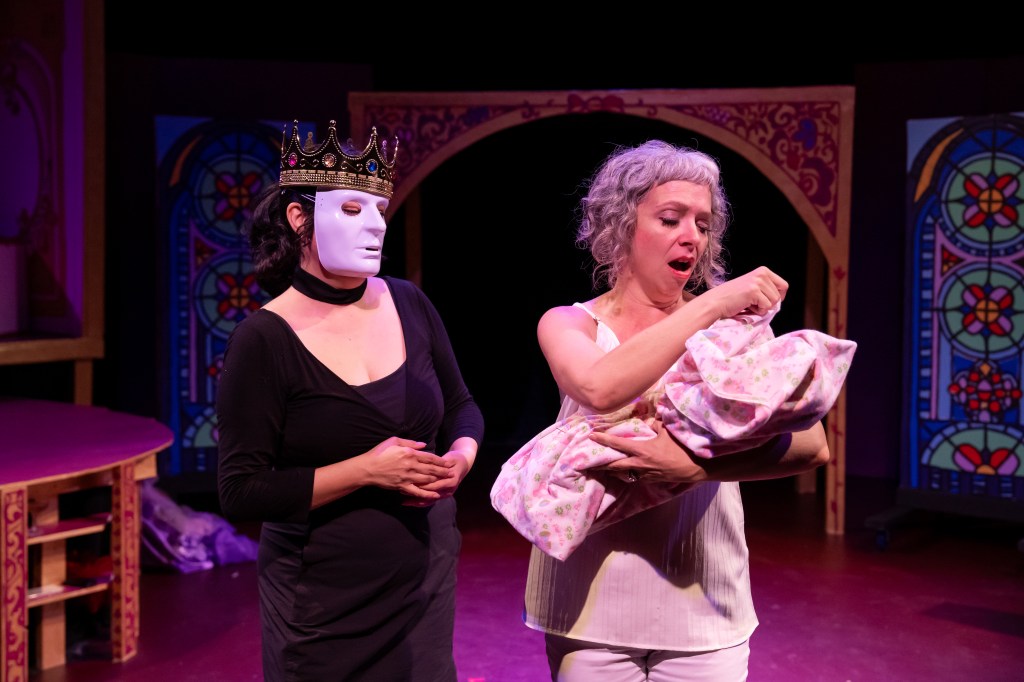
In a similar way, Shannon Grounds’ Zel is also masking her true feelings, using the veneer of a flighty party girl to hide the pains of her past, as her desire to be loved and accepted leads her down dark paths. Shannon Grounds is such a warm performer, and the way she, and the play, weaponizes that effervescence to create a dichotomy between it and the pain of her abusive relationships is quite an accomplishment. The refreshing feeling one gets when we see where her path finally leads is one of the play’s real joys, and the journey is only elevated by Grounds thoughtful, relatable performance.
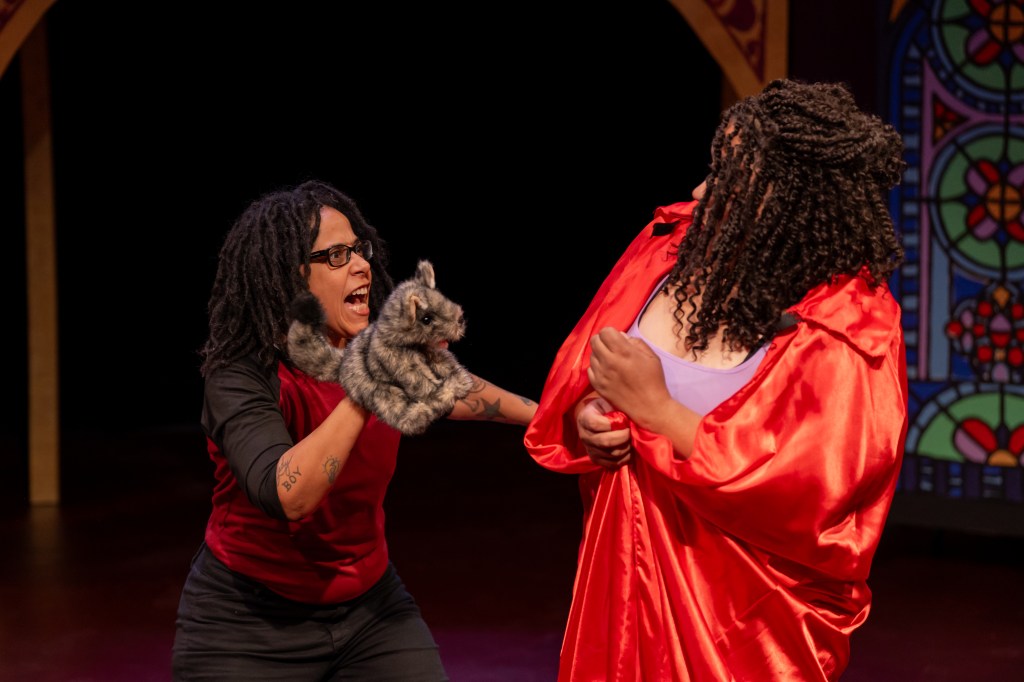
Speaking of stark dichotomies, Chelsea Manasseri’s Nieve was a revelation, as the actress excels at playing both the young, uncomfortable version of herself, growing into her body too fast and disliking the attention she gets from it; as well as the more seductive, confident version of herself, shutting herself off in the cut-throat corporate world, to protect her from the leering eyes and hard, grasping hands of the world around her. Manasseri is captivating here, pivoting from scared cub to slinky minx with aplomb, all the while never losing sight of the delicate, sensitive soul, even when it’s forced behind a hardened shell.
khattieQ’s unassuming portrayal of Ruby caught me off guard, as it’s a performance that grows during its time on stage. Their examination of the loneliness of the queer experience is intriguing to watch unfold, a touching, offbeat element that adds a fascinating ingredient into the play’s broth. Though Ruby is never strictly ostracized from the group, one feels like they’re often one step removed from the rest of the women. Whether it’s their queerness, their poverty, or their being a person of color, there’s always an element that doesn’t quite click with the other girls, which makes the moments where she comes together in moments of camaraderie with the others, especially her warm moments with Larson-Quiñones’ Bella, such a joy to behold.
One elements of I Wanna be a F*cking Princess that I enjoy is that it never paints these women are perfect paragons, as spotless perfect jewels that are tossed around by the world. Danu Mara’s Dre is one such imperfect woman. Even at her youngest, there’s an underlying sense of insecurity in the character, which often manifests as jealousy, disdain, and even outright cruelty to the other girls. It’s a difficult task Mara has been handed, playing a character so unlikable on the surface, but it’s to her credit that we never lose sight of the underlying reasons for this behavior. Through her character, we get a picture of how a neglectful childhood can lead to strong emotions of jealousy and blame, and how it can change our relationships going forward. It’s a subtly powerful performance, which is rounded out by an absolutely devastating final act that had this critic at the brink of tears the entire trip home.
I Wanna Be a F*cking Princess is a profound examination of what it means to be a woman in today’s society, full of earnest and heartfelt performances from an exquisitely chosen cast of some of Austin’s best actresses. Ground Floor Theatre continues to bring audacious, unique productions to Austin, and one hopes that they’ll be able to continue to do so for many years to come.
I Wanna be a F*cking Princess has a runtime of 80 minutes with no intermission, and is playing at the Ground Floor Theatre through May 24th, 2025. To purchase tickets, or find more information, please visit GroundFloorTheatre.org.
Photos courtesy of Lens of Athena Photography.

 AUSTIN ARTS WATCH